
Why the Commercial Vehicle Parts Market Has More Potential Than Most People Realize
Over the past decade, which automotive segment has been the most stable, recession-resistant, and capable of delivering sustained growth?
The answer is not luxury vehicles, nor new energy passenger cars. It is a segment that many people tend to overlook—commercial vehicles.
Commercial Vehicles Are Quietly Outperforming the Overall Automotive Market
From 2015 to 2025, global commercial vehicle sales increased from 23.37 million units to 28.82 million units, while their share of total global vehicle sales rose from 26% to over 30%. Except for the pandemic-affected years of 2021 and 2022,commercial vehicle growth rates consistently outperformed the overall automotive market.

This means that commercial vehicles have become one of the most stable and resilient sectors in the global automotive industry.
Unlike passenger vehicles, whose demand is often influenced by consumer sentiment, commercial vehicle demand is driven by the hard needs of the real economy:
· Global supply chains have undergone regional restructuring, driving sustained demand for heavy-duty trucks and freight transportation.
· The rapid expansion of e-commerce platforms such as Amazon, Shopee, and JD.com has fueled last-mile delivery demand, boosting sales of light-duty trucks and pickup trucks.
· In emerging markets such as India and Southeast Asia, ongoing urbanization and infrastructure development continue to create strong demand for construction and transportation vehicles.
In other words, as long as logistics, trade, and infrastructure development continue to expand, the commercial vehicle market will continue to grow.
In the Commercial Vehicle Industry, Aftermarket Parts Often Offer Greater Potential Than Vehicle Sales
Vehicle manufacturers focus on incremental sales, while the aftermarket benefits from the existing vehicle population. According to Credence Research, the global commercial vehicle parc has exceeded 350 million vehicles. Compared with passenger vehicles, commercial vehicles operate under entirely different conditions:
1. Higher Component Wear and Tear:Annual mileage is typically 5–10 times higher than that of passenger vehicles, and operating conditions are far more demanding.
2. Higher Downtime Costs:For logistics operators and construction fleets, every hour a vehicle is out of service translates directly into lost revenue.
3. More Rational Purchasing Decisions:Fleet owners prioritize practical considerations: components must be reliable, cost-effective, and readily available when replacements are needed.
As a result, the commercial vehicle parts market offers several compelling advantages:
· High replacement frequency
· Demand driven by necessity rather than preference
· Stable profit margins
· Strong repeat-purchase potential
Radiators: An Undervalued Goldmine in the Commercial Vehicle Aftermarket
Among the many wear-and-tear components used in commercial vehicles, radiators stand out as a product category worthy of special attention.
Commercial vehicles are essentially heat-generating workhorses. Heavy loads, steep inclines, harsh environments, and long operating hours keep engines under constant thermal stress.
While passenger vehicle radiators typically last 3–5 years, commercial vehicle radiators often require repair or replacement within 1–2 years.
commercial vehicle radiators represent a product category that combines volume, profitability, and recurring sales. For distributors, they are among the most attractive core components in the aftermarket.
Which Global Markets Deserve the Most Attention?
1. Southeast Asia
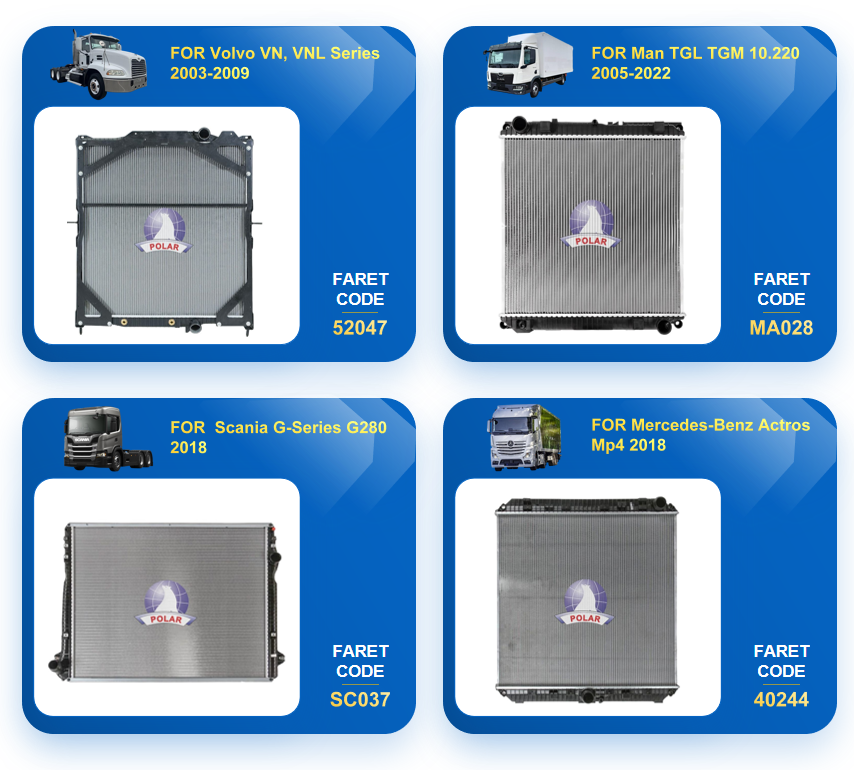
The rapid growth of e-commerce, logistics, and urban delivery services has created strong demand for commercial vehicles throughout Southeast Asia. Pickup trucks are especially popular due to their dual-purpose nature, serving both commercial and personal transportation needs. Meanwhile, the light-duty truck segment continues to expand alongside growing logistics demand.
Key Vehicle Segments: Pickup trucks, Light-duty trucks, Urban delivery vehicles
Recommended Popular Vehicle Models:
2. Middle East & Africa
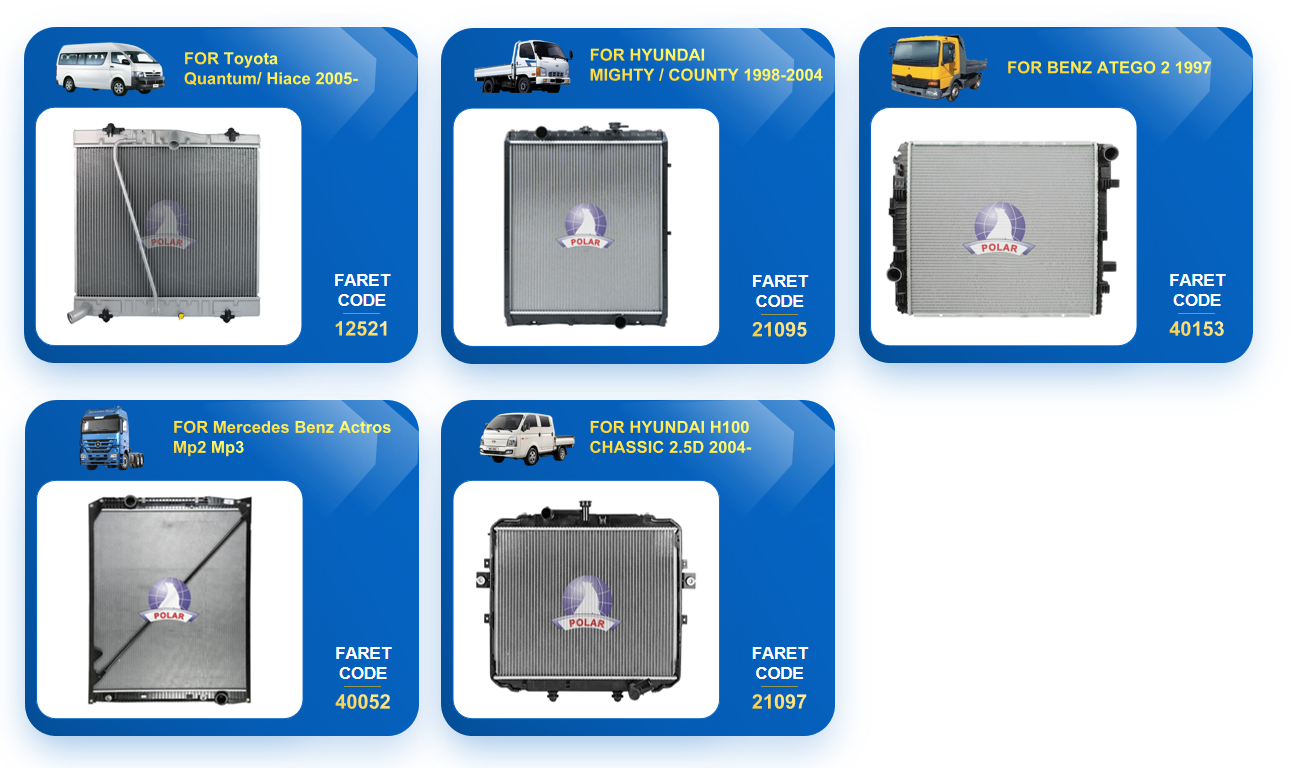
The Middle East continues to invest heavily in infrastructure development, creating sustained demand for construction and heavy-duty vehicles. Across Africa, accelerating urbanization has made pickup trucks indispensable tools for production and transportation.
High temperatures, salt exposure, and challenging road conditions significantly shorten component life cycles, while local aftermarket supply chains remain underdeveloped. This creates attractive growth opportunities with relatively limited competition.
Key Vehicle Segments: Construction heavy-duty trucks, Pickup trucks and light-duty trucks
Recommended Popular Vehicle Models:
3. India
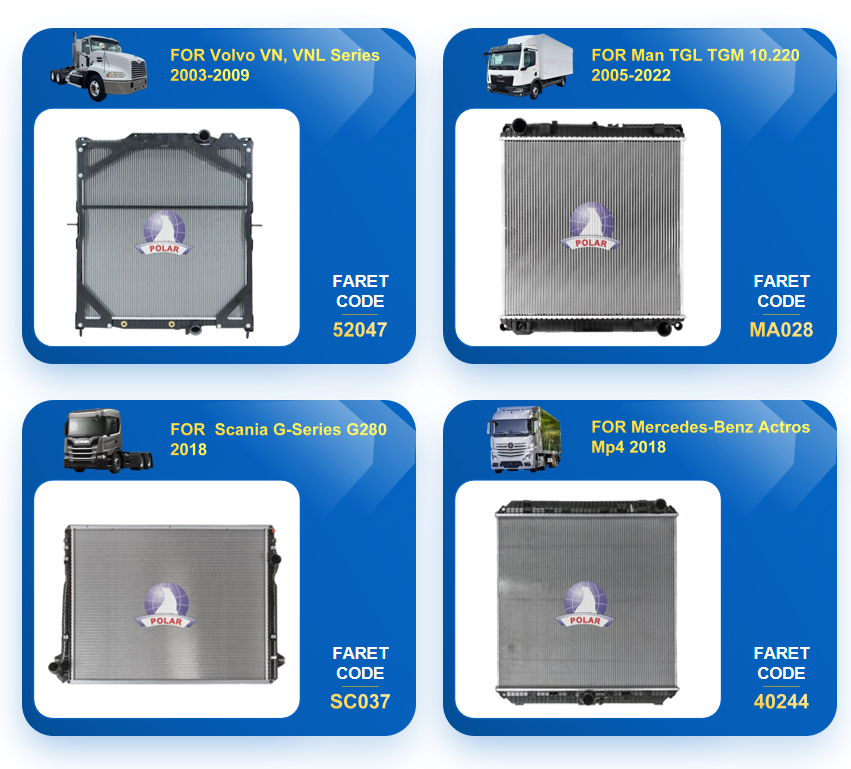
With annual commercial vehicle sales approaching 4 million units, India is expected to become the world's second-largest commercial vehicle market around 2030, driven by: Demographic growth, Manufacturing expansion, Infrastructure investment. The country's hot climate accelerates radiator aging and wear, while high-quality aftermarket alternatives remain in short supply. As a result, Chinese-made replacement parts enjoy a significant value-for-money advantage.
Key Vehicle Segments: Light-duty trucks, Medium- and heavy-duty trucks
Recommended Popular Vehicle Models:
4. Latin America
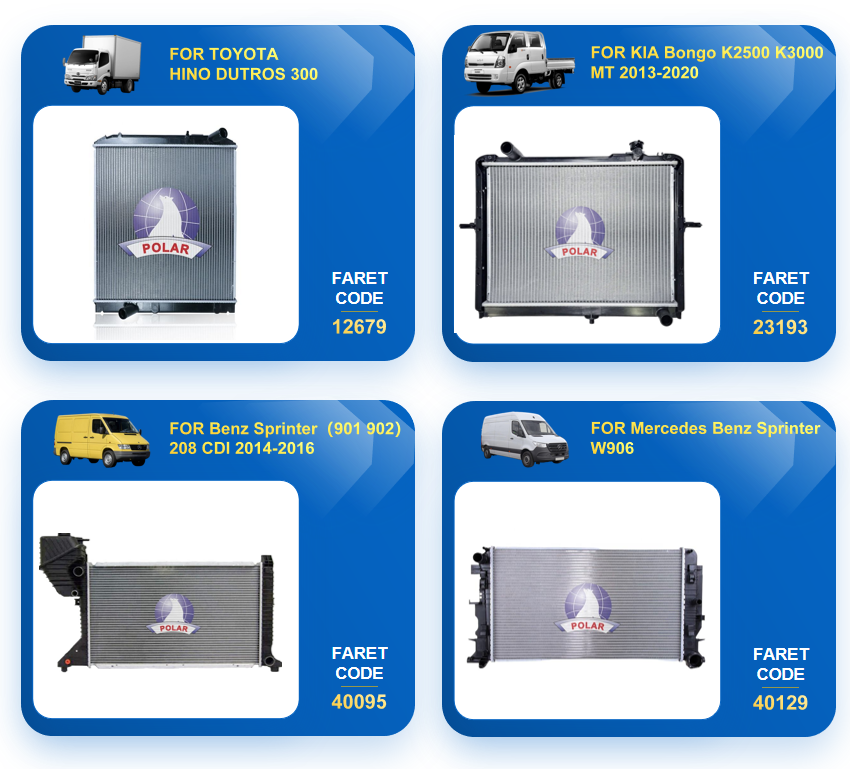
Mexico is benefiting from the nearshoring trend in North American manufacturing, creating sustained demand for industrial transportation. Vehicle specifications and aftermarket requirements are also highly compatible with the U.S. market. Brazil operates the largest agricultural logistics network in South America. Long-haul transportation of commodities such as soybeans and corn generates strong and continuous demand for heavy-duty trucks. Overall, Latin America offers a mature and stable market well-suited for large-scale export operations.
Key Vehicle Segments: Agricultural transport trucks, Long-haul logistics trucks, Pickup trucks, Construction transport vehicles
Recommended Popular Vehicle Models:
POLAR Radiators: Engineered for Extreme Commercial Vehicle Conditions
Designed to meet the challenges of demanding commercial vehicle operations worldwide, FARET POLAR Radiators help distributors succeed in diverse and harsh environments.
Key Advantages:
1. Extensive vehicle coverage with a comprehensive SKU portfolio
2. High-performance materials with superior corrosion resistance
3. Precision welding technology for reliable sealing performance
4. Advanced cooling design for outstanding heat dissipation efficiency
5. Strict quality control to ensure consistent product reliability
6. Fast response times and customization support
The growth of the global commercial vehicle industry is not a short-term trend—it is a structural shift that is expected to continue for the next decade and beyond.
FARET POLAR is committed to partnering with distributors and industry professionals around the world to unlock opportunities in the global commercial vehicle aftermarket and capture the next wave of industry growth.
Contact us to explore partnership opportunities.


